
Showing posts with label fascism. Show all posts
Showing posts with label fascism. Show all posts
Saturday, 3 December 2011

Saturday, 20 November 2010
Pre-Freudian Psychology.
One thing I can't quite understand about the ruling class is their attitude to culture. Seeing that they are generally very well educated, and seeing the reputation that high art and culture has, you would imagine that they would supportive of the arts. But no, like everything else that elevates us above germs, they find it superfluous to the demands of extracting profit.
So we have a long slow war of attrition waged against the BBC, among the most symbolic organisations in the world, which produces programmes such as 'Discovering Music', quite simply one of the most lovely things this island produces. This is a programme which is accessible but not patronising, which explores great art-music in detail, tying together the old problem of emotional and social impact with technical construction and execution, and is endlessly fascinating to boot. That our ruling class would want to destroy this in favour of private broadcasters who would never, ever commission something quite so informative and enriching, highlights the inherent contradictions of conservatism better than almost anything. Fuck them.
Here's some quotes from the programme, which are, let's face it, total E&V fodder...
I mean, there is an interesting argument to be had regarding the final chords of Tristan. It's quite easy (and actually quite correct) to identify the B major at the very climax as a kind of false unity, as posited by fascism. I mean, every time I listen to it, it sends shivers up and down my spine, I become liquid of limb and prone to swooning, but I know at the same time that it is a bare-faced metaphysical lie. This is why Mahler will always be an improvement on Wagner - listen to the disintegration at the end of the Adagio from Mahler 9, and you hear the unfulfilling disintegration of self-hood that is almost a perfect companion to the voice in Beckett's 'Malone Dies' - ever obsessed with an end that cannot be experienced from within the self that is utterly focussed upon it. Although Wagner is correct about desire, he is wrong about the Will.
So we have a long slow war of attrition waged against the BBC, among the most symbolic organisations in the world, which produces programmes such as 'Discovering Music', quite simply one of the most lovely things this island produces. This is a programme which is accessible but not patronising, which explores great art-music in detail, tying together the old problem of emotional and social impact with technical construction and execution, and is endlessly fascinating to boot. That our ruling class would want to destroy this in favour of private broadcasters who would never, ever commission something quite so informative and enriching, highlights the inherent contradictions of conservatism better than almost anything. Fuck them.
Here's some quotes from the programme, which are, let's face it, total E&V fodder...
The most famous chord progression in the history of music
Keeps fulfilment at bay
World of unfulfilled longing and endless desire
As we suddenly become aware of sexual attraction and painful desire
The most poignant interrupted cadence of all
We feel the music has come alive after the disjointed and lonely opening but it has only come alive to experience further heartache and unfulfilment.
But the harmony, like our unconscious lives, is never truly at rest. The structural goals in Tristan are moments of unfulfilment, disorientation and frustration of varying intensities.
We might think that at last the music is about to achieve emotional fulfulment. Longing and denial, both musically and psychologically, will be a thing of the past.
One of the mightiest climaxes in all music, a revelation of pre-Freudian psychology in which climactic achievement is merely an illusion.
In spite of the spiritual and erotic adventures, the striving and longing, we're back where we started.
From agony and unfulfilled desire in life, to mystical union in death.
This is orchestral genius at work.
This music still speaks to us today with a power that is hard to resist.
Wagner now begins to build his final overwhelming climax, striving for mystic union in death.
Only a compositional giant could have sustained such a span, and kept alive without monotony this world of agony and unfulfilled desire.
This was a work that revolutionised the composition of music.
I mean, there is an interesting argument to be had regarding the final chords of Tristan. It's quite easy (and actually quite correct) to identify the B major at the very climax as a kind of false unity, as posited by fascism. I mean, every time I listen to it, it sends shivers up and down my spine, I become liquid of limb and prone to swooning, but I know at the same time that it is a bare-faced metaphysical lie. This is why Mahler will always be an improvement on Wagner - listen to the disintegration at the end of the Adagio from Mahler 9, and you hear the unfulfilling disintegration of self-hood that is almost a perfect companion to the voice in Beckett's 'Malone Dies' - ever obsessed with an end that cannot be experienced from within the self that is utterly focussed upon it. Although Wagner is correct about desire, he is wrong about the Will.
Tuesday, 7 September 2010
A Kindly Discussion.
So I wrote something about The Kindly Ones which harked back to something Spillway wrote about it, and now The New Ennui has written something about it too.
I must say that in the aftermath of reading the book I read a little more history, not only about the massacres that are depicted in the novel (and thinking of the visit I made to Auschwitz-Birkenau ten years ago, where I was utterly disgusted by the group of Americans taking photos. and yet myself wandered around dumfounded and confused, unable to grasp any meaning in the rubble), but also about the Nazis who were shot for helping Jews to escape, or the officers who attempted to use their aryan good looks as a way to get close enough to Hitler to kill him in a suicide bomb attack. Perhaps the underlying and terrifying insinuation that the novel communicates so well is that you, me, almost everyone, would attempt to find a way to deal with the situation without putting themselves at risk. This also reflects badly on the pervasive narrative of 'pure evil' and 'pure innocence' that perhaps is not the way one should be memorialising the period as it passes out of living memory. I suppose, also, that this enquiry might lead one back to Sartre and freedom.
I must say that in the aftermath of reading the book I read a little more history, not only about the massacres that are depicted in the novel (and thinking of the visit I made to Auschwitz-Birkenau ten years ago, where I was utterly disgusted by the group of Americans taking photos. and yet myself wandered around dumfounded and confused, unable to grasp any meaning in the rubble), but also about the Nazis who were shot for helping Jews to escape, or the officers who attempted to use their aryan good looks as a way to get close enough to Hitler to kill him in a suicide bomb attack. Perhaps the underlying and terrifying insinuation that the novel communicates so well is that you, me, almost everyone, would attempt to find a way to deal with the situation without putting themselves at risk. This also reflects badly on the pervasive narrative of 'pure evil' and 'pure innocence' that perhaps is not the way one should be memorialising the period as it passes out of living memory. I suppose, also, that this enquiry might lead one back to Sartre and freedom.
Thursday, 19 August 2010
The end of the world, unique each time.
Here's a few brief notes on a somewhat-less-than-cheery book I read while I was away, Jonathan Littel's The Kindly Ones. I know one person who has read this, so would perhaps like to discuss, but for the rest of you this will probably be not much fun. I'm also going to be spoiling it, so beware...
Forrest Gump in the Holocaust
One thing that struck me about the structure of TKO is that it in a way mirrors the construction of Forrest Gump, that mawkish and generally bollocks film that cleared up at the Oscars all those moons ago. You'll remember the premise: Forrest Gump, a man who suffers from an unspecified learning difficulty, manages to 'find' himself in all manner of significant moments in American history, through sheer accident and serendipity. Well, Littel has done something very similar here. Max Aue, the protagonist of TKO, 'finds' himself at a number of the very most infamous moments of the Second World War. He attends the Babi Yar massacre, he is trapped with the Sixth Army in Stalingrad, and he is right there in the 'Final Solution', among other events. Littel's planning is immaculate: the research he put into the book is famous, and it has been praised for its 'accuracy', if such a term is praise in this case. But it's a similar premise to Gump - playing with events that the reader will presumably know about, while tying them together with crushing detail that swamps the reader, all the while throwing in a number of knowing asides referring to this process.
Ulysses in the Holocaust
Another obvious comparison to be made is that between TKO and Joyce's Ulysses. The two novels, both massive, are structured around texts from Greek literature. Where Joyce used the Odyssey, Littel uses The Eumenides. Both of the novels create a kind of representational matrix around their fastidious historical accuracy, with scenes and characters specifically the correspondents of their classical template. But the differences are almost mirror-like. Whereas Joyce took an epic poem and used it to signify heroism within the quotidian and the mundane, Littel uses a tragedy, and somehow evokes the crushing banality of ultimate human horror and suffering. Both also manage to use boredom, and boring the reader, as powerful tools. The way the initial horror the reader feels at the massacres and murders that Aue witnesses, supervises and takes part in slowly fades to a consistent rumble of terror is frightening precisely because it's easy to think that this might be how it works for those committing terror; one latches onto details and routines, as the incessant roar of death and misery becomes featureless and constant. On the other hand, some of the characters that Littel uses to correspond to his classical model (such as the two policemen) seem superfluous, crammed in for the sake of structure.
Magic Realism in the Holocaust
For many reasons I thought TKO was a far better novel than 'Everything is Illuminated', upon which so much praise is lavished. Indeed, after TKO, one finds Safran-Foer's whimsical magic realism a little harsh, cynical. Although the terror described by EiI is powerful and harrowing, it's also mawkish and sentimental, and seems in retrospect to be somewhat lightweight, despite its genuine horror.
Sex-dreams in the Holocaust,
But this brings me onto another thing, something that at first annoyed me about TKO, but later I found more ambiguous, confusing. Aue is a bureaucrat par excellance, a taker of notes, a writer of reports, a ticker of boxes. In many ways he embodies the stereotype of Nazi evil, and in a way it is only his cultured bourgeois attitude, and his tragic family story that raise the character out of the sterility of the Eichmann stereotype (although of course Eichmann is a major character in the novel). But although until about half-way through the novel the detail is horrific and drab at the same time, before long fantasy begins to make its presence felt. Long hallucinatory passages start appearing, often related to starvation and weakness. At first I was put in mind of Sartre's 'Iron in the Soul', which features a long hallucinatory sequence as one of the characters starves in a prisoner-of-war camp. But beyond that, and once the dreams and fantasies start to become hyper-sexual, it was 'Gravity's Rainbow' that really came to mind. GR is, from start to finish, dream-like and fantastic, and luridly sexual. But this is a consistent trajectory of that novel, whereas in TKO it often feels like an intruder into the lucid and dry bureaucratic side of the novel. Of course this is the point, but there's different ways I can read that: either it's a way of making things happen in the novel (Aue's escape from Stalingrad is a little convenient for my liking), in which case it's a weakness. On the other hand, the difference in register between Aue's increasingly numb reaction to what is going on around him, and the increasing hysteria of his dreams and fantasies, might be read as a pessimistic admission that not even a catastrophe of that scale can take one away from one's own psyche, one's own neuroses. Or perhaps, on the other hand, Littel is trying to make a strange and minor redemptive point, that horror of such scale is not something that can be coasted through, numbly, and that the mental disintegration is to be understood as probable and another level of accuracy. By the end of TKO, one is never sure if anything is actually happening at all, what with Aue having such a tenuous grip on reality. Indeed, the only things holding the novel together at all are the dates, the details that Littel has been so careful with; History.
Wednesday, 11 November 2009
Albert Speer and the Fascist Theory of Ruins

I recently attended an interesting little talk by Brian Dillon on the subject of ‘Modern Ruins’ at my beloved Barbican. The talk was tied-in with an installation by Robert Kusmirovski, called ‘Bunker’, which is basically a reconstruction of a generic underground military installation which revels in its artifice, its aestheticised faux-dilapidation and its ambiguous play of historical sign. Dillon (who had to rush off to an awards ceremony for which he was nominated) gave a whistle-stop tour of theories of ‘the Ruin’, most of which he suggested was covering old ground, and in a way it was. We whizzed past Rome, ‘the Grand Tour’, Soane and Gandy, Speer, Virilio, Pasmore and so on, up to Jane & Louise Wilson, Cyprien Gaillard and other contemporaries.
It was all very fascinating, especially when Dillon spoke of “layers of fiction & distance”; reminding me of one main functions of the romantic – the aestheticising of utterly banal space-time and thus the self insertion into the fictional. But he also pointed out how on the one hand, the whole field is riddled with cliché; “there is an overinvestment in ruin space”, while on the other hand there is still work to be done in working out the intellectual structure of ruinenlust and nostalgia. Here’s a little hint of where I think it might lead – there are lessons that we need ruins to teach us, but it is vital that the latter be left behind in this process of working out.
Anyway; I think it’s not a particularly controversial point by now to note that there are numerous theories of ruins, all of which overlap to some extent, making some kind of claim to politicised melancholy, but which all point in very different political directions; this can be a very difficult idea to negotiate around. Somewhat predictably, very possibly the worst theory of Ruins comes from the Nazis…
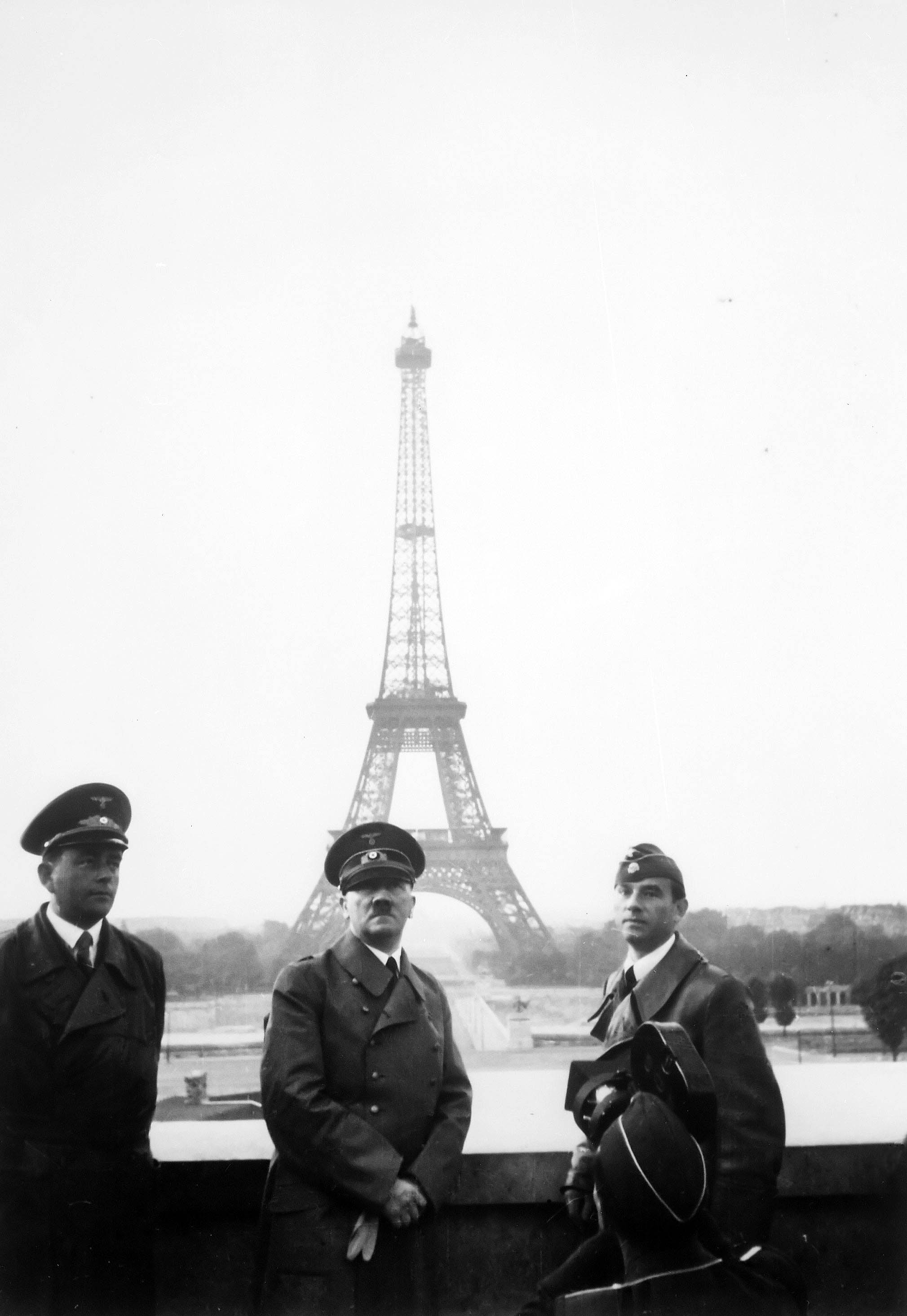
Lots has been said about Albert Speer and his ‘Theory of Ruin Value’, which is strange considering that the discussion thereof takes up a very small section of his rather thick memoirs. I recently went for a quick read of the passages in question. Thankfully the book was a hardback, so I was spared the very dubious privilege of walking around the British Library carrying a book emblazoned with swastikas. I’d like to perhaps try to properly delineate what it is that makes his theories unique, and what political implications there are in them. To do so I’ll quote the entire section on ruins, which comes as Speer is recounting his designs for the Zeppelin Field at Nuremburg:
Hitler liked to say that the purpose of his building was to transmit his time and its spirit to posterity. Ultimately all that remained to remind men of the great epochs of history was their monumental architecture, he would philosophize. What had remained of the emperors of Rome? What would still bear witness to them today, if their buildings had not survived? Periods of weakness are bound to occur in the history of nations, he argued, but at their lowest ebb, their architecture will speak to them of former power. Naturally, a new national consciousness could not be awakened by architecture alone. But when after a long spell of inertia a sense of national grandeur was born anew, the monuments of men’s ancestors were the most impressive exhortations. Today, for example, Mussolini could point to the buildings of the Roman Empire as symbolising the heroic spirit of Rome. Thus he could fire his nation with the idea of a modern empire. Our architectural works should also speak to the conscience of a future Germany centuries from now. In advancing this argument Hitler also stressed the value of a permanent type of construction.
The building of the Zeppelin field was begun at once, in order to have at least the platform ready for the coming Party Rally. To clear ground for it, the Nuremburg street-car depot had to be removed. I passed by its remains after it had been blown up. The iron reinforcements protruded from concrete debris and had already begun to rust. Once could easily visualise their further decay. This dreary sight led me to some thoughts which I later propounded to Hitler under the pretentious heading of “A Theory of Ruin Value”. The idea was that buildings of modern construction were poorly suited to form that “bridge of tradition” to future generations which Hitler was calling for. It was hard to imagine that rusting heaps of rubble could communicate the heroic inspirations which Hitler admired in the monuments of the past. My “Theory” was intended to deal with this dilemma. By using special materials and by applying certain principles of statics, we should be able to build structures which even in a state of decay, after hundreds or (such were our reckonings) thousands of years would more or less resemble Roman models.
To illustrate my ideas, I had a romantic drawing prepared. It showed what the reviewing stand on the Zeppelin field would look like after generations of neglect, over-grown with ivym its columns fallen, the walls crumbling here and there, but the outlines still clearly recognisable. In Hitler’s entourage this drawing was regarded as blasphemous. That I could even conceive of a period of decline for the newly founded Reich destined to last a thousand years seemed outrageous to many of Hitler’s closest followers. But he himself accepted my ideas as logical and illuminating. He gave orders that in the future the important buildings of his Reich were to be erected in keeping with the principle of this “law of ruins”
Albert Speer, Inside the Reich, p.96-98

So, what’s this all about? What can we ascertain about ruins from this brief and (given Speer’s proclivity for telling porkies) uncertain passage? At first glance it is a perfect little example of the intellectual shit that was the Nazi brand of romanticism. Zeitgeist? Check. Nationalism? Check. Institutionalised self-pity? Check. But should be taken at least a little bit seriously.
The first paragraph in particular goes against the usual grain of ruinenlust, the Ozymandius-style ‘all things pass’ attitude, by pushing through the melancholy and seeing it as an exhortation to greatness. It’s a bitter and reactionary sense of the lost object, one so very common to fascism, which requires a fictionalised eden-like historical condition that must somehow be returned to (We even see this now in the UK with the appeal to some mythical ‘indigenous Britain’). The contemporary left-variation on this sense of the ruin is that longing for the future we were promised yesterday, so it shouldn’t be dismissed out of hand. But what the ruin is doing here is that the condition of stable decay, of disuse, is creating the conditions for the fictionalised history to be narrated in the first place (for example; if Hitler was really interested in what had remained of the emperors of Rome, a certain basement in Siberia would have given him a better answer). Ruins here become totems, fetish-items for invigorating ideological narratives.
The second paragraph is brilliant however. Reactionary aestheticisation unfolding before our very eyes. Speer, with posterity and grandeur on the mind, finds himself traumatised by the sight of a bus station being demolished, which sends him scuttling further into the syrup of pseudo-posterity. Sighting the genuinely perishing remains of concrete and steel, he encounters the trauma of guaranteed disappearance, but has to somehow contain it. It’s almost as if ‘the ruin’ here becomes a safe point after encountering an unbearable truth- with the knowledge of disappearance now apparent, any disavowal has to concede at least some ground to it – ‘the Ruin’ here becomes an adopted immortality, a quasi-immortality. Even if the complete object is no longer viable, rendered meaningless through guaranteed loss, the ‘trace’ has become reified. There is also the irony of his fear of modern materials and their ‘ugly’ state of decay, which is a gut-reaction that casts a long shadow into architectural aesthetics. I’d be wary, however, of suggesting that this particular reaction guarantees the progressive power of reinforced concrete, even if that is hinted at.
And the third paragraph, which mirrors JM Gandy’s paintings for Soane, or Hubert Robert’s paintings of the Louvre, is a classic example of using the sentimental image of the ruin as a ‘temporal flag’- staking a claim for posterity, based on the persistence of architectural objects of antiquity. It’s not a particularly controversial point, to be honest.
So what are the basic points of the ‘fascist theory of ruins’? The ‘nationalisation’ of victimhood and melancholy, the attempted closure after an encounter with genuine disappearance, a distrust of modernisation, and lashings of sentimentality. It’s quite easy really. What complicates matters somewhat is that Speer also designed the ‘cathedral of light’, which was part of the very same bloody Zeppelin field building and party conference event, which is perhaps one of the most successful pieces of modern architecture of the last century, marking the apotheosis of the trends towards dematerialisation and lightness in architecture that were started by the ferro-vitrous buildings… just read this:
The actual effect far surpassed anything I had imagined. The hundred and thirty sharply defined beams, placed around the field at intervals of forty feet, were visible to a height of twenty to twenty-five thousand feet, after which they merged into a gentle glow. The feeling was of a vast room, with the beams serving as mighty pillars of infinitely high outer walls. Now and then a cloud moved through this wreath of lights, bringing an element of surrealistic surprise to the mirage. I imagine that this “cathedral of light” was the first luminescent architecture of this type, and for me it remains not only my most beautiful architectural concept, but after its fashion, the only one which has survived the passage of time.
Albert Speer, Inside the Reich, p.101

This all becomes very difficult at this point. How can a producer of such turgid, leaden and portentous architecture also create the ultimate in hi-tech architecture as early as the middle of the 1930s? If we take seriously the fantastical effects of technology, if, after Benjamin, we suggest that “not architecture alone but all technology is, at certain stages, evidence of a collective dream”, then we have to hand it to Speer for the creation of this event, the limit point of the process of making-transparent of architecture. One has to be careful in how one criticises this, as one will be running close to admitting that architecture is an ideologically ‘flat’ set of forms, able to be utilised by any form of power equally.
Is it possible to synthesise these two aspects of the Zeppelin field? Given that it still exists, truncated but not yet in what one could call a ruined state, it doesn’t necessarily seem like a call to arms for a future great Germany. Now used as the grandstand for motor racing events, with the field used for sports, the banality of the space and its occupancy is its genuinely uncanny aspect. Rather than venerating fragments, the fact that things are continually re-used is more significant than that they are sometimes worshipped as ‘dead buildings’. The fact that their use often fails to live up to their proposed social scale is also significant. I would tentatively suggest that rather than ruined stone worship, the “cathedral of light” is the more intellectually interesting and potent form of disappearance. But as far as synthesis comes into it, I think that the vanishing architecture of iron and glass offer us a route out of the dead ends of ruination and its idolatry. The crystal palaces are often both failed ‘ruin’ and immaterial event, and I think I’ll stop here before I start talking about ‘spectrality’ again…
Sunday, 25 October 2009
biased bbc etc...

And also, I cannot recommend the following posts related to some tv programme that I definitely did not watch the other night enough:
Anton Vowl's one,
&
K-Punk's one & two.
Subscribe to:
Posts (Atom)