Tuesday, 6 October 2009

the Infomart Uncanny


One of my main theses, if not my main thesis, is that the 19th century iron-and-glass building is even now one of the most significant phenomena in architectural culture. If you’ll allow me a cheap metaphor, their reflective surfaces act as prisms that have the potential to refract our understandings of modernity, technology, commerce, ideology, power, history, etc… They are not empty signifiers like the Ode to Joy, another problematically iconic 19th century cultural achievement, but they can be and have been seen in different ways at different times.

Regarding technology, the link between the Crystal Palace itself and Hi-Tech architecture is a strong one; there is a very powerful and settled image of the Victorian Engineer-Genius such as Paxton or Brunel as the forerunner of our giants of architecture, Foster, Rogers, Balmond, via people like Buckminster Fuller and so on; what at another point I would like to properly define as the ‘Solutionist’ narrative of twentieth century architecture. But even a figure like Brunel does not possess a clear identity when it comes to modernity; his futurism is simultaneously regarded with sickly nostalgia for the ‘Great-ness’ of Britain (sandwiched as he was between Winston Churchill and Diana Spencer in that horrifically vulgar 2002 BBC poll).

Another example of this strange forwards and backwards straining of modernity is the Infomart building in Dallas, Texas. Completed in 1985, slap bang in the middle of the most horrid phase of Pomo architecture, it is a pastiche of the Crystal Palace. Like much postmodern architecture it combines the cheapness of then-contemporary commercial construction techniques with ‘historic reference’, although in this case rather than generic historical signifiers like keystones or pediments there is actually only one source of reference. As the building is large, square planned and generic, this reference is achieved mostly through the detailing of the curtain wall along the façade, although it features a few small vaulted rooms and a single large atrium that comes complete with a replica of the Crystal Fountain from the CP (made by the same company, Barovier-Toso). The building certainly doesn’t achieve the dizzying internal vistas and rhythms of the original.

But how perfect an example of architecture as a self-legitimising activity! The Informart was built as the ‘world’s first successful technology community’, and is specifically filled with telecoms companies, IT, software companies and so on… Housing an industry that was still very young, and whose future significance was not at all guaranteed, the building uses the Crystal Palace in a ridiculously ideological way:

INFOMART opened in 1985 as a permanent trade center for the information technology industry. Covering 1.6 million square feet, the building was modeled after London’s Crystal Palace, the site of the first World’s Fair, the Great Exhibition of 1851. Like the Crystal Palace, INFOMART Dallas is a stunning landmark whose bold design and elegant seven-story atrium reflect the forward-thinking purpose for which the building was constructed. For this reason, England’s Parliament has declared INFOMART Dallas as the official successor Crystal Palace.


Now, quickly passing over the most obvious error (England doesn’t actually have a parliament, let alone one that would need to judge an ‘official’ successor to the CP), there is another significant fail; much as it is easy to understand the attempt at channelling (conjuring?) the historical power of the first ‘World’s Fair’ building, akin to digging up the bones of a giant so that one can attempt to stand on their shoulders, the Infomart building wasn’t modelled after the Great Exhibition at all. The multiple vaults are rather copies of the ill-fated, sprawling melancholy of the Sydenham Palace of 1854, a building which -despite being constructed from the same iron and glass as its earlier incarnation - was a much more complex and uncertain building than the shed of 1851. This has a historical echo in the fact that the Infomart was for a long time considered a failure, a “a huge silver and white elephant.”

There’s another level to the unintended significance of the Infomart building. It may well have been seen as pretty damn modern at the time, but this was only a couple of years after Beauborg & Lloyds, or Willis Faber Dumas and the HSBC building. The supposedly egalitarian transparency of British Hi-Tech was not yet the all-suitable architecture of choice for commerce that it would later become. In retrospect the Infomart building looks doubly dated- both explicitly historicist and also now deeply unfashionable, part of a stream of design that ran dry. That one of the first physical gestures of the new immaterial landscape of the digital age would be so awkward, so insecure, is perhaps apt.

“If Infomart is a cultural symbol at all, it surely represents high tech’s lack of self-confidence, its ambivalence about the present and the future, and its consequent neet to establish close ties to the past. Infomart’s intriguing façade thus remains merely a façade.”

Howard P. Segal, The Cultural Contradictions of High Tech, in Technology, Pessimism and Postmodernism, 1994


`

Monday, 5 October 2009

Who said romance is dead?

or: Gravissimum est adamare nec politiri.

Yunghalm relates that he saw in Java a plain far as the eye could reach entirely covered with skeletons, and took it for a battlefield; they were, however, merely the skeletons of large turtles, five feet long and three feet broad, and the same height, which come this way out of the sea in order to lay their eggs, and are then attacked by wild dogs (Canis rutilans), who with their united strength lay them on their backs, strip off their lower armour, that is, the small shell of the stomach, and so devour them alive. But often then a tiger pounces upon the dogs. Now all this misery repeats itself thousands and thousands of times, year out, year in. For this, then, these turtles are born. For whose guilt must they suffer this torment ? Wherefore the whole scene of horror? To this the only answer is : it is thus that the will to live objectifies itself.

-Schopenhauer

Females lay the eggs in well-protected areas scattered around the reefs. After competing with 2-5 other males, the largest male approaches the female and gently strokes her with his tentacles. At first she may indicate her alarm by flashing a distinct pattern, but the male soon calms her by blowing water at her and jetting gently away. He returns repeatedly until the female accepts him, however the pair may continue this dance or courting for up to an hour. The male then attaches a sticky packet of sperm to the female's body. As he reaches out with the sperm packet, he displays a pulsating pattern. The female places the packet in her seminal receptacle, finds appropriate places to lay her eggs in small clusters, and then dies.


-Wikipedia

Monday, 21 September 2009

The Proverbial Toolbox

This latent religiosity is only too observable among those disciples of Deleuze who are busy blessing, in unbridled Capital, its supposed constitutive reverse, the 'creativity' of the multitudes. These disciples believe that they saw-that's what you call seeing-in the alter-globalisation demonstrations of Seattle or Genoa, when an otherwise idle youth partook in its own way in the sinister summits of finance, the planetary Parousia of a communism of 'forms of Life'. I think that Deleuze, often sceptical vis-à-vis his own constructions once they touched on politics, would have laughed up his sleeve about this pathos.


-Alain Badiou, Logics of Worlds

I’d like to pass on a little anecdote, if I may. While recently attempting to enjoy an needlessly overpriced burger in the **** public house, I experienced one of the worst cases of Marshall Mcluhan Syndrome* I’ve ever had to endure. The whole meal was spent in direct earshot of a group of students from a certain establishment of architectural education, and their chat was some of the most conceited prattle I’ve ever heard (outside of recordings of my own voice, of course!). The thing that upset me the most wasn’t the ridiculous ignorance of people who are at the very top of the human pile (21st century global jet-set bourgeoisie), but the ridiculous sense of intellectual entitlement these young architects had; they almost embodied the preening self-importance of a profession that considers itself to be the last bastion of the renaissance-man. I nearly spat out my maris-piper chips in disgust as my auditory companions discussed how their rudimentary studies in Latour or whoever is fashionable this week meant that after studying architecture “they really ought to get a sociology degree as well”.

It's really strange how often one has to defend a thinker against their defenders (with Derrida-against Derrideans, with Deleuze-against Deleuzians etc), and it's more than a little disheartening. It's not as if I'm an expert in the field by any means, but I do personally know experts in the field, and thus can usually tell the difference between them and your fashion-theory types, and so-called-'radical' architecture has been completely ridden with those for about thirty-years. I can honestly say I've never tried to use ill-read Lacan to get somebody into bed, but I've certainly witnessed that occurring more often than I care to think about.

So it's extremely interesting to read Simon Reynold's brief history of pop-theory, which, although speaking of a scene I wasn't privy to, certainly has a lot of parallels with the cargo-cult philosophy of the architecture scene. But where Simon likens the 'theory basher' music journalist to a drug dealer, encouraging their audience to intoxicate themselves on the rush of intellectual hypertrophy, I'm always left with the impression that nothing ruins a good idea like its dissemination, which is of course a position of almost limitless misanthropy. If only it weren't so.

*Marshall Mcluhan Syndrome, for the last person in the world who might not know what I am referring to:

Tuesday, 15 September 2009


But to your further content, I'll tell you a tale. In Moronia Pia, or Moronia Felix, I know not whether, nor how long since, nor in what cathedral church, a fat prebend fell void. The carcass scarce cold, many suitors were up in an instant. The first had rich friends, a good purse, and he was resolved to outbid any man before he would lose it, every man supposed he should carry it. The second was my lord bishop's chaplain (in whose gift it was), and he thought it his due to have it. The third was nobly born, and he meant to get it by his great parents, patrons and allies. The fourth stood upon his worth, he had newly found out strange mysteries in chemistry, and other rare inventions, which he would detect to the public good. The fifth as a painful preacher, and he was commended by the whole parish where he dwelt, he had all their hands to his certificate. The sixth was the prebendary's son lately deceased, his father died in debt (for it, as they say), left a widow and many poor children. The seventh stood upon fair promises, which to him and his noble friends had been formerly made for the next place in his lordship's gift. The eighth pretended great losses, and what he had suffered for the Church, what pains he had taken at home and abroad, and besides, he brought noblemen's letters. The ninth had married a kinswoman, and he sent his wife to sue for him. The tenth was a foreign doctor, a late convert, and wanted means. The eleventh would exchange for another, he did not like the former's site, could not agree with neighbours and fellows upon any terms, he would be gone. The twelfth and last was (a suitor in conceit) a right, honest, civil, sober man, an excellent scholar, and such a one as lived private in the university, but he had neither means nor money to compass it; besides he hated all such courses, he could not speak for himself, neither had he any friends to solicit his cause, and therefore made no suit, could not expect, neither did he hope for, or look after it. The good bishop, amongst a jury of competitors thus perplexed, and not yet resolved what to do or on whom to bestow it, at the last, of his own accord, mere motion, and bountiful nature, gave it freely to the university student, altogether unknown to him but by fame; and to be brief, the academical scholar had the prebend sent him for a present. The news was no sooner published abroad, but all good students rejoiced, and were much cheered up with it, though some would not believe it; others, as men amazed, said it was a miracle; but one amongst the rest thanked God for it, and said, Nunc juvat tandem studiosum esse, et Deo integro corde sevire [now at length it proves worth while to be studious, and to serve God whole-heartedly]. You have heard my tale: but alas! it is but a tale, a mere fiction, 'twas never so, never like to be, and so let it rest.

-Robert Burton, The Anatomy of Melancholy

Monday, 14 September 2009

Historicist Hi-Tech

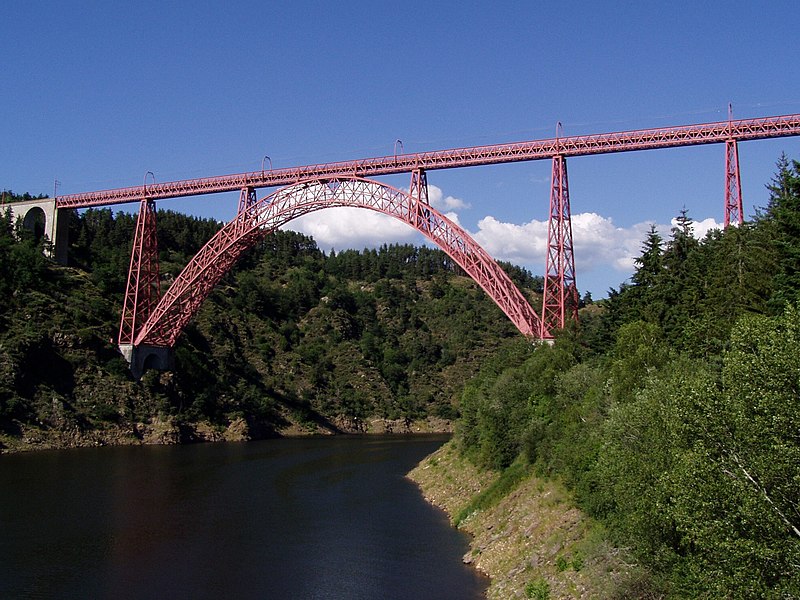
Now of course the bridge is one of the most virtuosic of engineers' structures. There is perhaps a tendency to assume that utilitarian structures are semiotically blank, have no significance, solutionism at its most pure. But of course, it's never really as clean as this.


Take the Milau viaduct in France, designed by Michel Virlogeux and Foster's. This is big, it's big, it's unbelievably big. It's also blank. Over 300 meters high, stripped down, almost minimal, if anything that bloody big could be said to be minimal. It makes a virtue of its simplicity, its lack of fuss, its attention to function.

But of course, you can see that it has Foster's written all over it, the type and shape of concrete, the curved section, the guard rails, we recognise in them an architectural language just like any other. There is only so far you can follow the logic of functionalism before you're left with purely aesthetic choices. In which case, the architect just covers their tracks with solutionist rhetoric; you see, it absolutely HAD to be this way.


But here's an interesting thing. This is Francis Soler, Jérôme Lauth and Vincent Jacob's entry to the same design competition. Francis Soler is one of the new ornamentalists, his Ministry of Culture project in Paris is covered in a perforated latticework that is reminiscent of Guimard, and this project is remarkable for its attempt to invoke a previous language, in a structure often thought to be purely functional. Don't forget how massive the span and distance of this viaduct is, and think of the effect of this filigree structure when viewed from the distance. And of course, it's steeped in history, it's an evocation of Eiffel, transforming his bridges and towers into what is simultaneously a work of post-modern reference and hi-tech trickery. It's also a little reminiscent of Nouvel's Institute of the Arab World, also in Paris, what with its super-tech responsive mashrabiya.


Basically, a project like Soler's, both unprecedented and also entirely familiar (uncanny, perhaps? maybe not...), a project like this undermines the Hi-Tech insistence in the ideological emptiness of solutionism.

Saturday, 12 September 2009

Dust to Digital

Au Clair de la Lune from Dust-to-Digital on Vimeo.


I featured this before when it was first discovered, but now there it has been released on vinyl by Dust-to-Digital. Basically; it's the earliest recording of the human voice ever made. It was made by Éduoard-Léon Scott de Martinville using a phonautogram - basically a one way microphone, and it was literally engraved into dust on a piece of paper, with no real way of replaying the sound. What has now been done is that the image of the sound has been scanned, and then reconstituted into sound. It's funny, because when it was first replayed, they got the speed very wrong and thought it was a recording of a peasant woman, when in fact it was Éduoard-Léon recording himself.

It does bother me, though, that there's no real information on exactly what programme was used to rebuild the sound. There are numerous bits of software such as coagula or metasynth which allow you to generate sound from an image, and I'm suspicious that this is all that they've done, which would make the resulting sound a very tenuous recreation of the original (even on a good day, if you take a sound, store its spectrogram and then input that back into the image-synth, the decay is substantial...) Basically, to call it the earliest recorded music is to be highly dismissive of this, something I've also featured before:


At the Crystal Palace they used to hold a triennial 'Handel Festival', with around 700 musicians, and 3,000 singers, and an audience of 20,000, and in 1888 this was recorded for the Edison company, which is the music above (note; the photograph was taken at the last festival in 1926).

If this wasn't haunto enough for you, a wee quote from the Musical Times, found in Musgrave's 'The Musical Life of the Crystal Palace' is telling. It regards the installation of a new ceiling for the concert hall, in the main transept of the palace, in order to solve the reverberatory problems of all that iron and glass:

Some of the chorsuses are no doubt heard with better effect than others; but the fogginess and uncertainty incident to the manifestations of the former festivals are wholly got rid of.


reverberations = fog and uncertainty. It's like a ghostly formula.

Saturday, 29 August 2009

Chopin, op.35 part III, played by Raoul Pugno


Circa 1903. Thanks to Al for drawing this to my attention.
Apparently "the sound is distorted because the record was cut on a defective turntable with fluctuating speed" (see also)...

Monday, 24 August 2009

The Accidental Invention of a Whole New Genre...


Is this not the best thing ever? I'm so impressed I can barely even begin to discuss it... Seen via FJ, who provocatively calls it 'Instant Hauntology'. I must have a wee think about that...

Wednesday, 12 August 2009

Zaha Hadid Architects - Purveyors of Architectural Melancholy

I was recently back up in Glasgow for a couple of days, and in that time I noticed that the new Transport Museum is getting closer to completion. Designed by Zaha Hadid Architects, it promises to be a rather expensive piece-of-shit of a building, and is generally a bit of a shame.


I’ve already discussed ZHA a number of times here, often in regards to unwittingly interesting things that they’ve done, such as the accidental brutalism of LF1 and the Wolfsburg museum (which I shall only even consider visiting once it has become seriously rotten) and I suppose that this counts as a continuation of the series. The more I think about it though, the more I consider just how truly ridiculous an architectural practice they are, the more I’m beginning to think that she, Patrick and all the rest of them are geniuses after all, just not at all in the way that they would like to think that they are. ZHA are conceptual architects, not because their ideas are particularly intelligent (bet you can't wait to have PS tell us what it’s all about), but because their over-attachment to a certain architectural ideology leads to results that are so ludicrous that they tell you far more about the world in which they appear than a more serious, successful piece of architecture could. Like Jeff Koons or Damien Hirst, the success of their blatant shit-ness speaks volumes about the state of their field, its ideologies and economies.


"They used to build stuff here..."

So; down by the River Clyde, on a site once occupied by docks, shipyards and all the usual riverside industry, there has been quite a lot of ‘regeneration’ recently. In this ‘award winning’ district (whose grasping, blubbering website is worth a look of despair), where once stood the incredible Meadowside Granaries (some of the biggest brick buildings ever built in Europe), there are now just some ghastly generic yuppiedromes, isolated from the rest of the city by the expressway, with no shops, through routes, nothing. Just across the mouth of the Kelvin from all this is the site for the new transport museum, on a site that once accommodated a couple of ugly black distribution sheds.


Brandwagon Jumping

The competition for the building was won in 2004, after Charles Gordon, the leader of Glasgow City Council, in a typically small-minded and vulgar attempt to jump on the brandwagon made clear that they wanted it to be built by an international starchitect. So despite the legitimate and prescient public complaints of Alan Murray (“I doubt if the international architects […] will consider a £40m museum project in Glasgow as the most important in their offices”), they bypassed the considered, clever, if somewhat dull project of Gareth Hoskins, one of the leading Scottish ‘Polite Modernists’, a man who evidently knows his GKC from his KFC. It’s a shame, because Hoskins’ project had more sensitivity to the continuity of cultural context of the Clyde, was leagues more sophisticated than Zaha’s proposal, and would probably have been cheaper as well. But oh well, if you’re that committed to the ideologies of regeneration, of which Meades’ deconstruction is still unsurpassed, then any old shiny piece-of-shit will do.

So what was the idea behind the project? At first glance, which is generally all that a sight-bite needs, the building is a ‘squiggly shed’. But there must be something more to it than that, so it’s worth going and having a look at the blurb on the ZHA website, which is unfortunately a masterpiece of broken English, vagueness and non-sequitur. For example;

The level of each visitor’s understanding varies but the building and its content remain static giving a fluidity of purpose. We believe the museum’s greater ambition is to expand its cultural context, hence our placement of the museum’s content where initially there was an exploitation of the site to magnify its position on the Clyde and with the city of Glasgow. Once again presenting the museum in a unique position.

With the site situated where the Kelvin flows into the Clyde, so the building can flow from the city to the river and in doing so it can symbolise A dynamic relationship where the museum would be the voice of both.


So basically, it seems that the building is kind of like a river, because it’s situated to the side of a couple of rivers. Great. That’s the best minds in the business operating there, seriously. The building is a shed with a series of pitched roofs, much like any old shed, in fact not unlike the sheds that were on the site beforehand, except it has been twisted. That’s all. Most of the other selling points for the project are no-brainers like having the building open to both the entrance and the river. I admit that I’m not sure what the ideal approach would be, I suppose something a little more sophisticated and somewhat more relevant, but nobody asked me so it doesn’t matter. All that the client seems to have wanted was a name, and a shape.


Weak Bravado

Recently there was an article in BD about the building, whose folded roof structure was recently completed. The article is mainly about the roof, but it speaks volumes about the relationship between contemporary architects, especially icon-stylists, and the engineers who make it happen. The key quote from the article is the following:

He says the competition-winning concept they had to work with was a system of ridges and valleys, which had to be translated into a structure.


Read that again.

So this is what has happened to the Modernists’ quest for a synthesis of the Engineer and the Architect in the last 80 years. Absolute disassociation. The architect wins the competition with a shape, which the brains then have to spend time figuring out how to solve. This isn’t exactly a full circle (the negation of the negation blah blah), but this is a very strange cultural position to be in, a truly postmodernist one. Now of course the Modernists’ quest for synthesis was vulgar and naïve, and of course this quasi-dialectical teleological view of the world and its cultural expressions had to be surpassed (ha!), but is this really where we’ve ended up, nearly forty years after Pruitt-Igoe and Complexity and Contradiction? The best architects in the world as decorators, as stylists? And what’s more - all that structure, all that difficulty, all of the real work of the building will be completely clad, both inside and out, expressed only as shape.

But there’s something else here as well. The BD article talks about the ‘vast internal space’ of the building, and everyone seems bloody pleased that they’ve managed to create a column free space for the inside. But how big is that space? In the spiel on Zaha’s website they say that it ranges from 30m to 50m wide, and is 200m long. So how proud should an architect and engineer be of a 50m wide, 200m long column free space? I suppose it depends on the time you’re designing it, really. For example, if I had designed a space, sometime around 1867 that had a column free span of 73m and a length of 210m, I’d be pretty proud of myself, and I’m sure that Willian Henry Barlow and Rowland Mason Ordish were pretty proud of their work at St. Pancras. But to do that now is nothing at all special, and those involved seem to be much more pleased that they’ve managed to fix all the problems that they made for themselves, than at the actual impressiveness of the spanning-feat.


Failure, Futility, Cheapness, Genius

Which brings me onto the reasons why I think that the building is actually a work of inadvertent genius. How better could a piece of architecture signify the impossible situation of basing a theory of architectural worth on its expression of engineering, that functionalist shibboleth? For a brief, but achingly significant period in the middle of the nineteenth century, architecture and engineering really did meet, in the sense that there was a reciprocal demand for expanding the limits of each field. New technologies led to new building types, which forced engineers to come up with new structural systems. The iron and glass palaces really were as close to that perfect moment as construction could get, but by the end of the 19th century, the capabilities of the engineers had exceeded what they could be needed for. Look at the Paris exhibition of 1889; the Eiffel Tower and the Galerie des Machines were both engineering feats that totally over-fulfilled the demands that could be made of them by society; there was no need for any building that vast, and there never really would be. In a way, this outstripping of technology is akin to ‘the fall’ of functionalism; humans are incapable of living up to this ideal synthesis of technology and design, and it can therefore only ever be a case of expressing something that cannot actually be, of ‘elegant’ (or of course, cost-effective) solutions to our inadequate problems. This fracture in the conceptual foundations of modernist architecture haunts it still.

In this case, the baroquely difficult solution to the five-second long design process is a perfect example of the dead end; of the arbitrariness and bankruptcy of cultural architecture, a seductive design moment, achingly contingent (should that squiggle be 500mm to the left or not?) followed by an interminable slog of realisation, keeping everybody busy. The fact that the buildings that occupied the site previously were sheds of about the same size, albeit of a less wow-factor shape is hilarious, making this an exercise in architectural futility.


And this futility just deepens… the building is an example of ‘Google Earth Urbanism’. That is to say; all this complexity can only really be seen from directly above. Without a spare helicopter, all you are really left with is the façade, which is marginally more interesting than your typical shed, and the blank slug-like form of the ‘swooshing’ S-shape, which meets the ground with all the elegance of a squished gastropod. And the interior, well, it’s actually really difficult to find any images of the interior, it would seem that they’re not particularly proud of it. There is this video, which shows a couple of swoops through what looks to be a thoroughly boring space, populated by the usual ghost people of our glorious eternal present, looking even more underwhelmed than usual, and there are a couple of related images. It’s not that impressive, is it? It certainly doesn’t flow in any meaningful way, and the kinks destroy any chance of appreciating the length of the space. It screams of cheapness.


And the cheapness just deepens… the original images of the building showed it to be constructed from ZHA’s favourite material; ‘generic shiny’. Now, owing to the shortage of ‘Generic Shiny’, and the difficulty of sourcing it ethically, they’ve had to settle for standing seam zinc, which you may recognise from Libeskind’s Jewish Museum Berlin and other buildings. Now, that material isn’t exactly one that remains shiny for any length of time, so in true Zaha style, the building will soon be looking very, very sorry for itself.

But then maybe that’s the point; perhaps there is no more appropriate expression of contemporary culture than a morose looking squiggly shed on the side of a once-great river. Perhaps Zaha Hadid Architects are pulling off a brilliant piece of architectural satire, melancholically mocking the aspirational world of the post-industrial cultural-landmark, bringing forth a gloriously futile, dirty and sad piece of unfulfilling architecture. But then maybe it’s just rubbish.

Monday, 3 August 2009

A little too long for a facebook status update, but...


Now go and brag of thy present happiness, whosoever you are, brag of thy temperature, of thy good parts, insult, triumph, and boast; thou seest in what a brittle state thou art, how soon thou mayest be dejected, how many several ways, by bad diet, bad air, a small loss, a little sorrow or discontent, an ague, etc.; how many sudden accidents may procure thy ruin, what a small tenure of happiness thou hast in this life, how weak and silly a creature thou art.


- Burton, The Anatomy of Melancholy