Tuesday, 1 December 2009

Architecture of Failure III


Well; ever since I moved into the cupboard that has been my home for the last year, I’ve been haunted by the sounds of architecture. That is to say, nearly every morning I have awoken to the sounds of the construction industry hammering away through the ventilation grille in my wall. For the first few months it was the sounds of demolition, and now it is the sounds of erection. The site for all this activity is just around the corner from my hovel where they are building what I initially presumed to be a pile of yuppie flats, and upon consultation of the planning application turned out to be a big, tasteless lump of yuppie flats (pictured below - take a bow, Hamiltons). The developer is 'Findon Urban Lofts' who, if you follow this link would appear to be connected to a Mario Leznick, previously convicted of "securities related offenses" (don't you just adore property developers?). Anyway, what’s particularly egregious about this particular shitty pile of ‘dromes is that the building being demolished was a former light industrial complex, which had come to house a variety of artist’s studios, galleries and workshops. This is how regeneration works- like a clumsy child who, with their overzealous affections crushes their pet to death, the charms of yuppie-living in an area alongside skint ‘creatives’ nearly always throttles any chance of said ‘creativity’ occurring any longer; hence my living in a cupboard that reeks of damp.

UPDATE:- I've found out that the development is called, wait for it, waaaaaaiiiiit for it............


'Arthaus'

It's just absolutely fucking sickening, isn't it?


Due to the Mare Street Conservation Area, the developer wasn’t permitted to demolish all of the previous complex; the façade had to be retained. As they tore the building down they exposed the innards of its previous life, but I’m reluctant to describe this as the interesting part; I’m writing something about reactionary-ghost aesthetics and I’ll hopefully deal with wistful-demolition love in that piece (you know the stuff, wallpaper and fireplaces floating on a wall high above the ground). What’s really interesting, to me, about this structure is its current condition; the façade is there on its own, and is being held up by a temporary structure, which of course had to be designed. This intermediate situation creates a number of interesting effects:


One of the problems of engineering-qua-aesthetics is the paradox of selling a design that looks more functional than functional. There are reasons for this of course, I’ve heard of a quote from Foster about how if an architect speaks about aesthetics, they instantly lose the client; this might partially explain the degeneration in architecture from Hi-Tech fantasy into Solutionist ennui. In a recent piece for icon I made the following argument about Santiago Calatrava’s Liège train station; engineering architecture is often nothing other than an expensive sculpture that expressively interprets the language of engineering. The Solutionists are thus caught in a paradox; they cannot create architecture that matches their rhetoric, but they cannot speak truthfully about their architecture. But if we want to see truly utilitarian engineering in action, if you need an example of what an ‘honest solutionist’ designs, then here we have it; a temporary structure whose sole purpose is to hold a façade up until the new structure is built behind it. The specifically fleeting nature of this structure means that it must be built as cheaply as possible, without ‘elegance’ or any other aesthetic consideration, Thus, like the entrails of a building that are hidden under floors and behind walls, it is as close to ‘pure’ engineering as we can possibly get.


The next significant aspect is the collage effect that is created by the juxtaposition of support and supported. The ‘retained façade’ as architectural element is usually retained because of some consideration of its architectural merit; this is basically and fundamentally an aesthetic choice. The façade in this particular case may be rudimentary, but it is well proportioned, has been designed with an eye for detail and is a good example of an inter-war building of its type. Put simply, it is architectural. The formal relationship that is generated between the solid, detailed façade, into which effort has been put, and the perfunctory steel frame that abuts and perforates it is a clash, a discord. It is not harmonious, in fact it is a dissonance. We could say that it performs in miniature the attempted sweeping away of bourgeois academicism that was one of the intentions of early modernism, or we could say that it is like a bricolage, a juxtaposition of two incommensurable spatial logics. At the very least, it jars.


I wrote, what feels like a long time ago, about Witley Court, one of the largest ruins in Britain, which has a number of similar structures created to stabilise it. Two of the main effects I noted there are present in my local stabilised façade; the surreal effect of seeing more sky through windows, with its resultant ambiguity of envelope, and the clashes of levels of detail, ornament and of material. When juxtaposing pre-modernist architecture with modernist in this way, we encounter the clash of a logic of perforated skin (in the old fashioned sense, a solid masonry wall with thickness and ornament, punctured by fenestration), with the logic of frame. The rhythms and proportions cannot match, they make no sense together, and this nonsense is the source of much of its aesthetic power. Note also that in this case, there is little or no decay in evidence. Besides the weathering of the materials, we have very little of what we can call ruination here.


But I am reluctant to suggest that we can work with this kind of thing. Eventually this façade will be backed up with a concrete framed yuppiedrome of almost no architectural, cultural or economic merit, and it would be folly to suggest that something like this temporary condition could be put to a genuine use, except as a stabilised ruin, but that is not something I tend to defend as a typology. I also don’t think it’s enough to merely ooh and ah at it, take a few pictures and then wait for it to be filled in. There is something genuine here, but I still can’t quite make it out, as I am too worried that we have here an example of deconstructivist mannerism, a pseudo-radical, wasteful game. At best we see here the power of dischord that Brutalism showed can be deeply radical (and deeply loathed), a non-proportional, non harmonic, anti-ordered architecture. But whereas Brutalism subscribed to the modernist paradigm of forging a new context (chaos becoming language through repetition of deeper structure), any architecture based upon this logic of juxtaposition can only ever be post-modern, playing registers of language off each other in the hope of a new truth.

In the spirit of speculation, however, I’ll have a look at some other examples of this kind of thing, just off the top of my head, of course. Perhaps we’ll be able to see some ways the ideas can be pushed, or not.


Wexner Centre for the Arts, Eisenman Architects, 1989
Well of bloody course. I have to admit that Peter Eisenman is sometime very interesting in spite of himself. Being a deconstructionist at heart, I have to admit I do sometimes find Eisenman’s ‘artificial excavations’ quite fascinating. It would seem that this building is the perfect example of what I was discussing above; awkward juxtaposition, the conflict of different languages of architecture, the plush and the plain. But there is way too much of everything here; it’s an art centre for starters, it’s an expensive, landmark building and the historical aspect had to be built from scratch, somewhat defeating the point. The conceptual underpinnings need explanation, which we really need to get past, and generally it’s over-blown and flabby.


Lloyd’s Building, Richard Rogers, 1986
Oh hello! What’s this? On the most avant-garde building in the UK there is an example of exactly what I’m talking about. This is the façade of the original Lloyds building, retained as part of the development. This aspect of the design is not really talked about much, and you don’t normally see this element in images. But when you visit the building, the effect of looking through the grand doors and seeing just the very bottom of the oil-rig behind is exhilarating.


Ulster Museum, Francis Pym, 1962
Sticking with the brutalism, here we have one of the most glorious juxtapositions of architectural register I know of. An extension to a stern inter-war neo-classical building, this joyously bonkers Chernikov-like composition is just sublime, although it leaves the deeper solid/void relationship basically intact. (do note that if Zaha didn’t emulate this for her Cincinnati building, then she obviously doesn’t know her architectural history).

Ok, and here’s a couple of bits of my work from my MA, where (now that I think about it from a distance) I was basically banging my head against these ideas of juxtaposition of register and collage over and over again, never able to find the escape route from indulgence and flamboyance. No wonder all my teachers were bemused; they’d both seen it all before but also didn’t know what the hell was going on, a condition not helped by my tendency to never eliminate an idea, creating projects that were thick conceptual soups, never resolved. Anyway, please don't be judgemental…


This project was an attempt to reinterpret the language of GLC housing as something radical again. Most importantly here, it involved the creation of a gigantic atrium in the shape of a shroud that would be constructed from white tarpaulin and scaffolding poles. The idea was to create a complexity that was also vulgar, rather than bespoke, and also to give the whole thing a sense of incompleteness; modernism & mass housing as unfinished business, y’see?


And this; the project that has begun to turn into a book, which perhaps was what it should have been in the first place. It’s basically a fairly standard deconstructivist premise; a building uncovered from the archives, creatively resurrected upon the same site, with a partial demolition of the buildings currently occupying that space. Again, there’s a million other ideas going on here, but just have a look at the partial demolitions and the juxtaposition of various registers of solidity and so on.

So after all this, another comparison – if brutalism is the modernity of a Schönberg, emancipating dissonance in the hope of cementing a new common language, then the effects I describe here are perhaps the architectural equivalents of the spectro-aesthetics we’re all surely by now so tired of discussing. Unable to either exorcise nor live up to the past, we create new complexities and abstractions from revealing the complicity of the historical in its own disappearance. This, at the very very least, is a step above ruin-worship.

Monday, 30 November 2009

Then He's a FOOL!


And to round off three little jazz posts.
This is an astounding piece of music, the uncensored version of 'Fables of Faubus' by Charlie Mingus from 1961. It's this kind of mock-sloppy, deeply political and conceptual music that would later be taken on by artists like Archie Shepp and Marion Brown as the radical wing of the 'New Thing' in the late 60s. I'd pay close attention to an absolutely incredible solo by Eric Dolphy on the alto saxophone, a searing example of his twisted, distorted and yet utterly faithful adaptation of Charlie Parker's musical language (and with a vicious 'When Johnny Comes Marching Home' quote for good measure).

It's a shame about jazz really, the way it fell apart into anachronistic heritage, bland 'fusion', desperate cheese, and the academy (where many of the conceptualists ended up). I spent my late teens listening to, practicing and performing jazz, quite promisingly in fact, before like most things I drifted away from it. It was always performances like this that attracted me to it though; rather than 'dinner jazz' or some sort of Kerouac-ian 'Magic Negro' vibe, what was so thrilling was the notion that here was a 'hardcore' musical form of unashamedly intellectual content, and this was never really inextricable from the politics of the scene.

dum dum da dum (V)


Bit of a digression, but listen to Freddie Hubbard quoting the funeral march at the beginning of his solo, approx. 30 seconds in.

Sunday, 15 November 2009

Jazz Beards


Just thought I'd point out a whole other stream of musical beards that have been almost completely forgotten... The avant-garde black jazzman beard of the late 50s/early 60s, which is almost exactly the same as the VI Lenin beard. Deeply intellectual and uncompromising, I definitely prefer it to the ecstatic-quasi-tribal beard that would appear on some of the same faces in later years...

Friday, 13 November 2009

Sold on Suicide

Well I don't care-for, th' things I eat,
Can't stand that boogie-woogie beat-
But I'm sold, on, suicide!

You can keep Der Bingle too, a-
And that darn "bu-bu-bu-boo,"
Cause I'm sold on suicide!

Oh! I'm not too keen on ration stamps
Or Mothers who used to be baby vamps,
But I'm sold, on, suicide!

Don't like either, the Cards or Browns,
Piss on the country and piss on the town,
But I'm S.O.S., yes well actually this goes on, verse after verse, for quite some time. In its complete version it represents a pretty fair renunciation of the things of the world. The trouble with it is that by Gödel's Theorem there is bound to be some item around that one has omitted from the list, and such an item is not easy to think of off the top of one's head, so that what one does most likely is go back over the whole thing, meantime correcting mistakes and inevitable repetitions, and putting in new items that will surely have occurred to one, and - well, it's easy to see that the "suicide" of the title might have to be postponed indefinitely!

Thomas Pynchon, Gravity's Rainbow, p.320

Wednesday, 11 November 2009

dum dum da dum (IV)


Chopin, Funeral March op.72, (1827)

A bit obvious this, but oh well; he did write another one when he was 17...

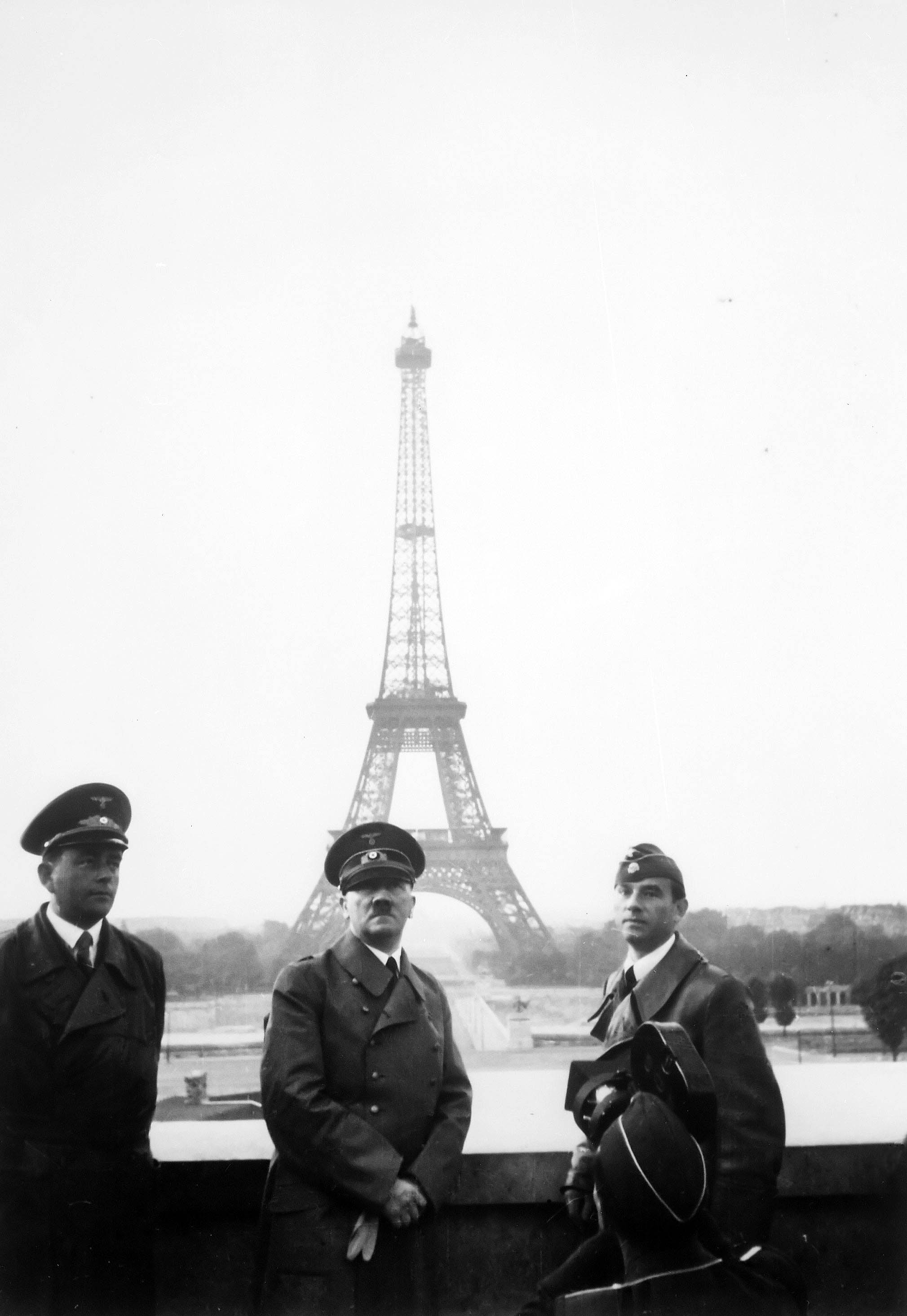
Albert Speer and the Fascist Theory of Ruins


I recently attended an interesting little talk by Brian Dillon on the subject of ‘Modern Ruins’ at my beloved Barbican. The talk was tied-in with an installation by Robert Kusmirovski, called ‘Bunker’, which is basically a reconstruction of a generic underground military installation which revels in its artifice, its aestheticised faux-dilapidation and its ambiguous play of historical sign. Dillon (who had to rush off to an awards ceremony for which he was nominated) gave a whistle-stop tour of theories of ‘the Ruin’, most of which he suggested was covering old ground, and in a way it was. We whizzed past Rome, ‘the Grand Tour’, Soane and Gandy, Speer, Virilio, Pasmore and so on, up to Jane & Louise Wilson, Cyprien Gaillard and other contemporaries.

It was all very fascinating, especially when Dillon spoke of “layers of fiction & distance”; reminding me of one main functions of the romantic – the aestheticising of utterly banal space-time and thus the self insertion into the fictional. But he also pointed out how on the one hand, the whole field is riddled with cliché; “there is an overinvestment in ruin space”, while on the other hand there is still work to be done in working out the intellectual structure of ruinenlust and nostalgia. Here’s a little hint of where I think it might lead – there are lessons that we need ruins to teach us, but it is vital that the latter be left behind in this process of working out.

Anyway; I think it’s not a particularly controversial point by now to note that there are numerous theories of ruins, all of which overlap to some extent, making some kind of claim to politicised melancholy, but which all point in very different political directions; this can be a very difficult idea to negotiate around. Somewhat predictably, very possibly the worst theory of Ruins comes from the Nazis…


Lots has been said about Albert Speer and his ‘Theory of Ruin Value’, which is strange considering that the discussion thereof takes up a very small section of his rather thick memoirs. I recently went for a quick read of the passages in question. Thankfully the book was a hardback, so I was spared the very dubious privilege of walking around the British Library carrying a book emblazoned with swastikas. I’d like to perhaps try to properly delineate what it is that makes his theories unique, and what political implications there are in them. To do so I’ll quote the entire section on ruins, which comes as Speer is recounting his designs for the Zeppelin Field at Nuremburg:

Hitler liked to say that the purpose of his building was to transmit his time and its spirit to posterity. Ultimately all that remained to remind men of the great epochs of history was their monumental architecture, he would philosophize. What had remained of the emperors of Rome? What would still bear witness to them today, if their buildings had not survived? Periods of weakness are bound to occur in the history of nations, he argued, but at their lowest ebb, their architecture will speak to them of former power. Naturally, a new national consciousness could not be awakened by architecture alone. But when after a long spell of inertia a sense of national grandeur was born anew, the monuments of men’s ancestors were the most impressive exhortations. Today, for example, Mussolini could point to the buildings of the Roman Empire as symbolising the heroic spirit of Rome. Thus he could fire his nation with the idea of a modern empire. Our architectural works should also speak to the conscience of a future Germany centuries from now. In advancing this argument Hitler also stressed the value of a permanent type of construction.

The building of the Zeppelin field was begun at once, in order to have at least the platform ready for the coming Party Rally. To clear ground for it, the Nuremburg street-car depot had to be removed. I passed by its remains after it had been blown up. The iron reinforcements protruded from concrete debris and had already begun to rust. Once could easily visualise their further decay. This dreary sight led me to some thoughts which I later propounded to Hitler under the pretentious heading of “A Theory of Ruin Value”. The idea was that buildings of modern construction were poorly suited to form that “bridge of tradition” to future generations which Hitler was calling for. It was hard to imagine that rusting heaps of rubble could communicate the heroic inspirations which Hitler admired in the monuments of the past. My “Theory” was intended to deal with this dilemma. By using special materials and by applying certain principles of statics, we should be able to build structures which even in a state of decay, after hundreds or (such were our reckonings) thousands of years would more or less resemble Roman models.

To illustrate my ideas, I had a romantic drawing prepared. It showed what the reviewing stand on the Zeppelin field would look like after generations of neglect, over-grown with ivym its columns fallen, the walls crumbling here and there, but the outlines still clearly recognisable. In Hitler’s entourage this drawing was regarded as blasphemous. That I could even conceive of a period of decline for the newly founded Reich destined to last a thousand years seemed outrageous to many of Hitler’s closest followers. But he himself accepted my ideas as logical and illuminating. He gave orders that in the future the important buildings of his Reich were to be erected in keeping with the principle of this “law of ruins”

Albert Speer, Inside the Reich, p.96-98


So, what’s this all about? What can we ascertain about ruins from this brief and (given Speer’s proclivity for telling porkies) uncertain passage? At first glance it is a perfect little example of the intellectual shit that was the Nazi brand of romanticism. Zeitgeist? Check. Nationalism? Check. Institutionalised self-pity? Check. But should be taken at least a little bit seriously.

The first paragraph in particular goes against the usual grain of ruinenlust, the Ozymandius-style ‘all things pass’ attitude, by pushing through the melancholy and seeing it as an exhortation to greatness. It’s a bitter and reactionary sense of the lost object, one so very common to fascism, which requires a fictionalised eden-like historical condition that must somehow be returned to (We even see this now in the UK with the appeal to some mythical ‘indigenous Britain’). The contemporary left-variation on this sense of the ruin is that longing for the future we were promised yesterday, so it shouldn’t be dismissed out of hand. But what the ruin is doing here is that the condition of stable decay, of disuse, is creating the conditions for the fictionalised history to be narrated in the first place (for example; if Hitler was really interested in what had remained of the emperors of Rome, a certain basement in Siberia would have given him a better answer). Ruins here become totems, fetish-items for invigorating ideological narratives.

The second paragraph is brilliant however. Reactionary aestheticisation unfolding before our very eyes. Speer, with posterity and grandeur on the mind, finds himself traumatised by the sight of a bus station being demolished, which sends him scuttling further into the syrup of pseudo-posterity. Sighting the genuinely perishing remains of concrete and steel, he encounters the trauma of guaranteed disappearance, but has to somehow contain it. It’s almost as if ‘the ruin’ here becomes a safe point after encountering an unbearable truth- with the knowledge of disappearance now apparent, any disavowal has to concede at least some ground to it – ‘the Ruin’ here becomes an adopted immortality, a quasi-immortality. Even if the complete object is no longer viable, rendered meaningless through guaranteed loss, the ‘trace’ has become reified. There is also the irony of his fear of modern materials and their ‘ugly’ state of decay, which is a gut-reaction that casts a long shadow into architectural aesthetics. I’d be wary, however, of suggesting that this particular reaction guarantees the progressive power of reinforced concrete, even if that is hinted at.

And the third paragraph, which mirrors JM Gandy’s paintings for Soane, or Hubert Robert’s paintings of the Louvre, is a classic example of using the sentimental image of the ruin as a ‘temporal flag’- staking a claim for posterity, based on the persistence of architectural objects of antiquity. It’s not a particularly controversial point, to be honest.

So what are the basic points of the ‘fascist theory of ruins’? The ‘nationalisation’ of victimhood and melancholy, the attempted closure after an encounter with genuine disappearance, a distrust of modernisation, and lashings of sentimentality. It’s quite easy really. What complicates matters somewhat is that Speer also designed the ‘cathedral of light’, which was part of the very same bloody Zeppelin field building and party conference event, which is perhaps one of the most successful pieces of modern architecture of the last century, marking the apotheosis of the trends towards dematerialisation and lightness in architecture that were started by the ferro-vitrous buildings… just read this:

The actual effect far surpassed anything I had imagined. The hundred and thirty sharply defined beams, placed around the field at intervals of forty feet, were visible to a height of twenty to twenty-five thousand feet, after which they merged into a gentle glow. The feeling was of a vast room, with the beams serving as mighty pillars of infinitely high outer walls. Now and then a cloud moved through this wreath of lights, bringing an element of surrealistic surprise to the mirage. I imagine that this “cathedral of light” was the first luminescent architecture of this type, and for me it remains not only my most beautiful architectural concept, but after its fashion, the only one which has survived the passage of time.

Albert Speer, Inside the Reich, p.101


This all becomes very difficult at this point. How can a producer of such turgid, leaden and portentous architecture also create the ultimate in hi-tech architecture as early as the middle of the 1930s? If we take seriously the fantastical effects of technology, if, after Benjamin, we suggest that “not architecture alone but all technology is, at certain stages, evidence of a collective dream”, then we have to hand it to Speer for the creation of this event, the limit point of the process of making-transparent of architecture. One has to be careful in how one criticises this, as one will be running close to admitting that architecture is an ideologically ‘flat’ set of forms, able to be utilised by any form of power equally.

Is it possible to synthesise these two aspects of the Zeppelin field? Given that it still exists, truncated but not yet in what one could call a ruined state, it doesn’t necessarily seem like a call to arms for a future great Germany. Now used as the grandstand for motor racing events, with the field used for sports, the banality of the space and its occupancy is its genuinely uncanny aspect. Rather than venerating fragments, the fact that things are continually re-used is more significant than that they are sometimes worshipped as ‘dead buildings’. The fact that their use often fails to live up to their proposed social scale is also significant. I would tentatively suggest that rather than ruined stone worship, the “cathedral of light” is the more intellectually interesting and potent form of disappearance. But as far as synthesis comes into it, I think that the vanishing architecture of iron and glass offer us a route out of the dead ends of ruination and its idolatry. The crystal palaces are often both failed ‘ruin’ and immaterial event, and I think I’ll stop here before I start talking about ‘spectrality’ again…

Tuesday, 10 November 2009

Yet More Self Promotion


I have a couple more things in this month's Icon, one of which is a quick article on a little silver box in Denmark by Dorte Mandrup architects, and another which is a slightly longer article about a big school in Zurich by Christian Kerez (who on the phone sounds almost exactly like Werner Herzog). As it's Icon it's print only, but if you like it when I write about things that I don't necessarily despise, but can't bring yourself to actually pick up a magazine, then by all means go to the Icon website where you can find some little articles by me that hopefully exceed your expectations of a typical web-story by having a light dusting of criticism attached. Find me pointing out that some of the SCI-Arc people are making retro-googie, or 'bigging up' the Catalan modernism of the post-Miralles lot, all in 200 or so words.

Friday, 6 November 2009

Thursday, 5 November 2009

Haunted Piano


This is exceptionally interesting.

What is happening here is that a chap has written a patch and designed a machine to mimic human speech patterns. The composer starts by recording a sound, in this case a child bizarrely reciting a document from the European Parliament. This sound can be analysed spectrographically, with particular regard to the speech formants, which are the resonant frequencies of various parts of the mouth and throat that allow us to create and distinguish the different vowel sounds. Speech generally doesn't have a specific 'tone', and so the defining character of the sound will be these formants, of which two are usually enough to distinguish any particular vowel. What the composer has also done is created a 'map' of the potential resonances of a piano. Each of the piano's 88 sets of strings vibrate at numerous different frequencies, in an arithmetic sequence (x,2x,3x,4x,5x... etc), diminishing in amplitude as the vibration rate increases (it is the clash of the logarithmic sequence of apparent pitch (octaves at x,2x,4x,8x,16x,32x... etc) and the arithmetic sequence of vibrations that makes harmony possible in the first place). By mapping out the potential frequencies of the piano as a sort of 'palette' of sound, and then constructing a machine that is capable of highly sensitive fractional nuance of tone, the original sound can be retroactively mapped onto the piano and then reproduced.

Now; this stimulates a number of little ideas we like; one - This ability to hear the voice through only partial recreation is known as 'auditory pareidolia', a sort of sonic 'gestalt' whereby a mostly random pattern is interpreted as a recognisable voice. Familiar as 'EVP', this is H-logy in a nutshell; the uncannily possessed technology (i.e. the machine inhabited by spirit, the non-present in presence etc etc.), which has been discussed at much length in various places.
two- one of the standard tropes in criticism of musical performance is what is often called 'the cry'; especially with woodwind, brass and string players, the ability to mimic human voice patterns is considered to be one of the most important paths to excellence of performance. What the video above suggests to me is that in the technique of 'great' pianists, there might already be barely conscious variations in fingering pressure that shape the overall tone slightly towards the timbre of vowel sounds, which would partially explain the emotional power of certain performances.

ps- this double coding of sound is something that I've done a fair bit of research into...